Rapid Industrial FastenersRapid Industrial Fasteners
 March 10, 2026
A Smart Choice for Demanding Applications.
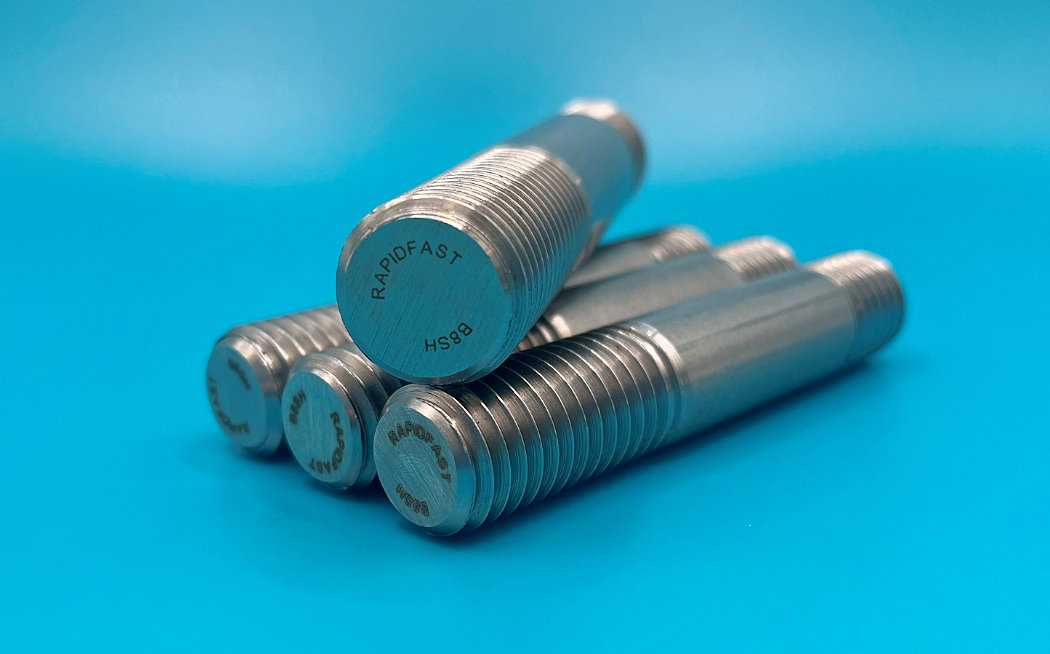
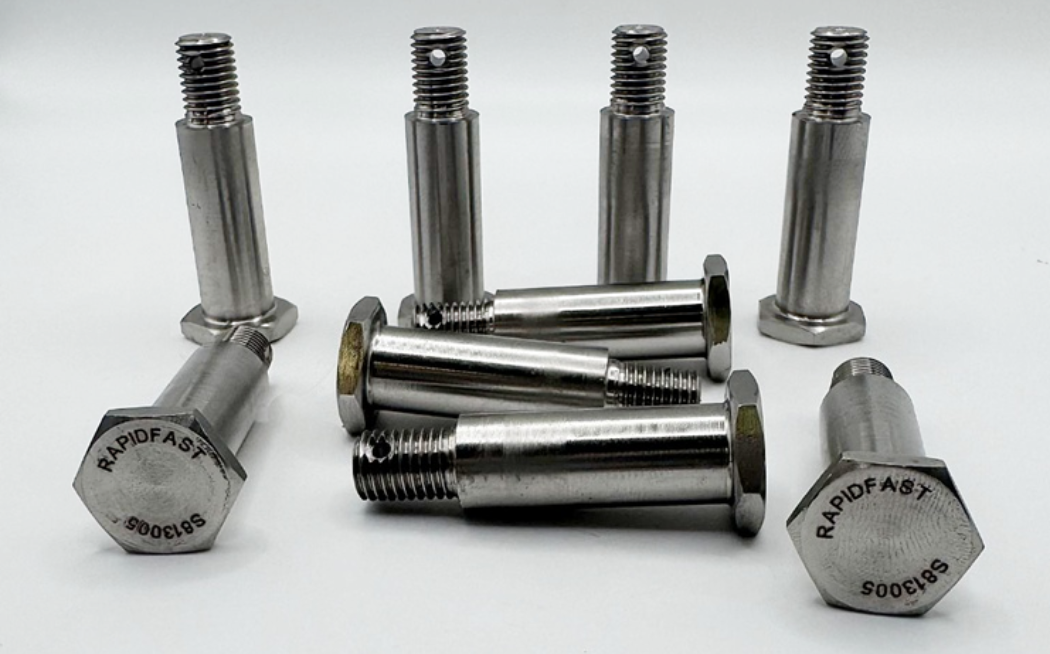
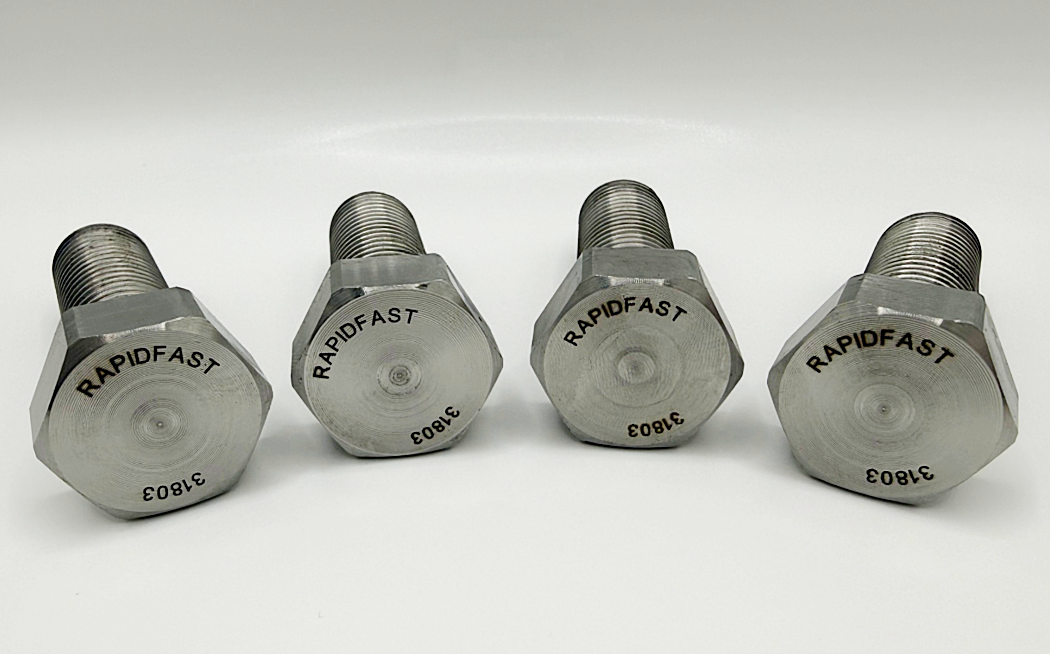
3-4 UNC x 2.1-4 Hex Bolts manufactured with 31803 Duplex.
Material specification can mean the difference between a fastener that performs flawlessly for decades and one that fails prematurely under environmental stress. The choice of fastener material is every bit as important as the choice of thread form or dimensional specification. Our 3/4 UNC x 2-1/4 Hex Bolts manufactured from 31803 Duplex Stainless Steel represents a compelling combination of mechanical performance and practical engineering intelligence.
From offshore oil and gas infrastructure to marine construction and subsea engineering, this specification is rapidly gaining recognition as a premium fastener solution.
31803 Duplex Stainless Steel
Is attracting growing attention among engineers, procurement specialists, and project managers across the UK and internationally. It is necessary to understand what makes duplex stainless steel fundamentally different from the more familiar austenitic grades that dominate much of the general fastener market.
Standard stainless steel fasteners are most commonly produced in grades 304 and 316, both are fully austenitic in their microstructure. These grades have served reliably for generations, offering good corrosion resistance and adequate mechanical strength. They do however have recognised limitations. In highly corrosive environments, particularly those involving chloride exposure, seawater immersion, or aggressive chemical media, austenitic stainless steels can be susceptible to localised corrosion mechanisms. In structural applications with demanding high tensile and yield strength, they can at times fall short.
31803 Duplex Stainless Steel addresses these limitations in a single material. Its defining characteristic is its dual-phase microstructure, which consists of approximately equal proportions of austenite and ferrite. Typically in a ratio of around 50% to 50%. This carefully balanced microstructure is not accidental. It is the result of precise alloy composition control, combining elevated levels of chromium, typically around 22%, with additions of molybdenum, nitrogen, and nickel in carefully defined proportions. The interaction between these two distinct phases at the microstructural level, produces a material that comfortably outperforms standard 304 or 316 stainless steel across a broad range of critical performance metrics.
Mechanical Strength
One of the most compelling advantages of 31803 Duplex for fastener applications is its mechanical strength. The yield strength is approximately twice that of standard 304 or 316 austenitic stainless steel. This means that for any given joint design, a fastener manufactured in 31803 can carry significantly higher loads before permanent deformation occurs. Or, conversely, a smaller fastener in 31803 can achieve the same clamping performance as a larger fastener in a standard grade.
For structural and civil engineers, this strength advantage opens valuable design options. It can allow for weight reduction in structures where fastener mass is a high consideration. It enables the use of smaller bolt pattern design, where space is highly constrained. Additionally, in offshore structures, bridges, port facilities, and large-scale industrial plant. The ability to achieve equivalent or superior performance with a higher-strength material can deliver meaningful cost and weight savings at the required system level.
The Magnetic Advantage
One of the less frequently discussed advantages. Because of its ferrite content, 31803 Duplex is magnetic. This stands in contrast to standard austenitic stainless steels such as 304 and 316, which are non-magnetic in their annealed condition.
The magnetic nature of a stainless steel fastener might appear to be a minor or even irrelevant material property. However, in practice, it opens a very practical capability in applications where fasteners are concealed within a structure or assembly following installation. Consider applications where hex bolts are installed behind architectural cladding or laminates, or within submerged locations where visual inspection is not readily possible. In these scenarios, the ability to locate a fastener using a simple compass or handheld magnet, transforms productivity. What might otherwise be a time-consuming and potentially destructive maintenance investigation, is now a straightforward and non-invasive operation.
For facilities managers, maintenance engineers, and structural inspection teams, this magnetic locate-ability can deliver meaningful practical benefits. Replacement of a concealed fastener that can be located quickly and precisely, is a very different proposition from one that requires destructive removal, specialist inspection equipment, or lengthy investigative work. All before the fastener can even be found. In offshore structures, where maintenance access is expensive and weather-dependent, this can directly reduce maintenance costs and faster turnaround times during inspection and repair programmes.
Locate-ability is genuinely distinctive and represents a form of engineering intelligence that is built into the material itself. It is the kind of considered material selection that separates well-engineered long-term infrastructure, from assemblies that create operational headaches years after installation.
Duplex in the Current Market
Investments in offshore renewable energy infrastructure, expansion of the oil and gas sector, growth in desalination and water treatment projects, all point strongly in the direction of high-performance corrosion-resistant fasteners. Duplex stainless steel grades, including 31803, are well positioned to meet that demand. As procurement teams seek to reduce whole-life maintenance costs and extend the intervals between fastener inspection and replacement programmes, the upfront investment in a premium material is increasingly recognised. Through delivering a strong whole-life component, compared to the repeated replacement costs associated with lower-grade alternatives, the decision to upgrade on the material of choice, is obvious.
If you’re looking to discuss the right material of choice, for your project requirements, our team is always ready to assist.
Ensure your next project benefits from strength, durability, and engineering intelligence.
See us in action 🎬

© Rapid Industrial Fasteners Limited.
All rights reserved. All content on this website, including text, images, graphics, logos, product descriptions, downloadable documents, and any other materials, is the intellectual property of Rapid Industrial Fasteners Limited unless otherwise stated.
No part of this website may be reproduced, distributed, modified, transmitted, or stored in any form without prior written permission from Rapid Industrial Fasteners Limited.
You may view, download, and print content for personal or internal business use only. Any commercial use, republication, or redistribution of content is strictly prohibited without express consent.
Unauthorised use of this website’s content may violate copyright, trademark, and other applicable laws.
Website by FolcraTech
© Rapid Industrial Fasteners Limited. All rights reserved. Privacy policy