Rapid Industrial FastenersRapid Industrial Fasteners
 April 21, 2026
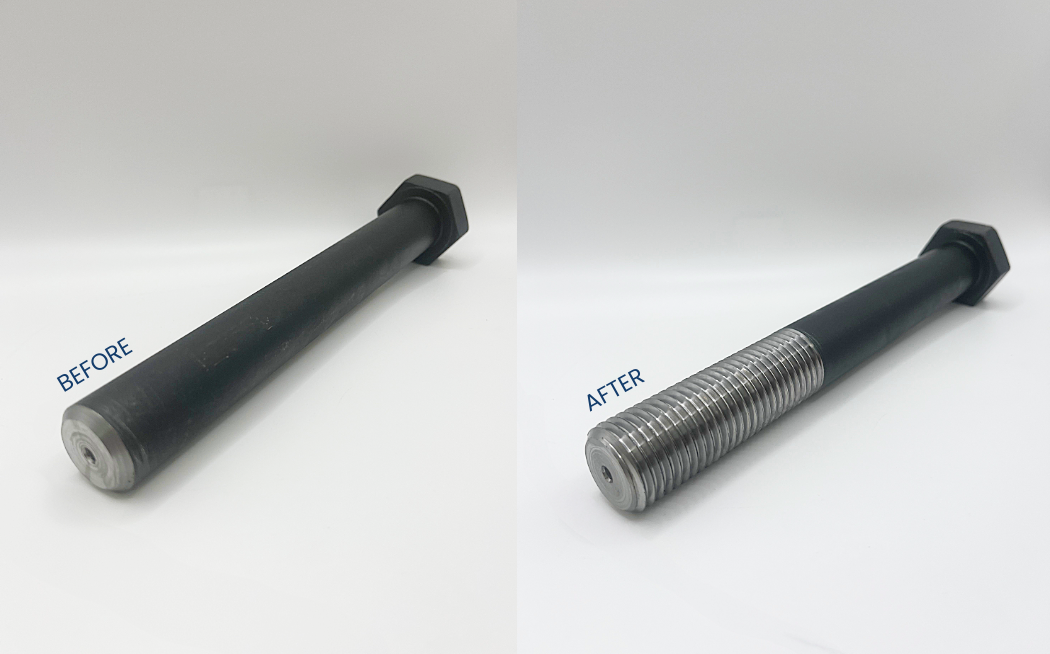
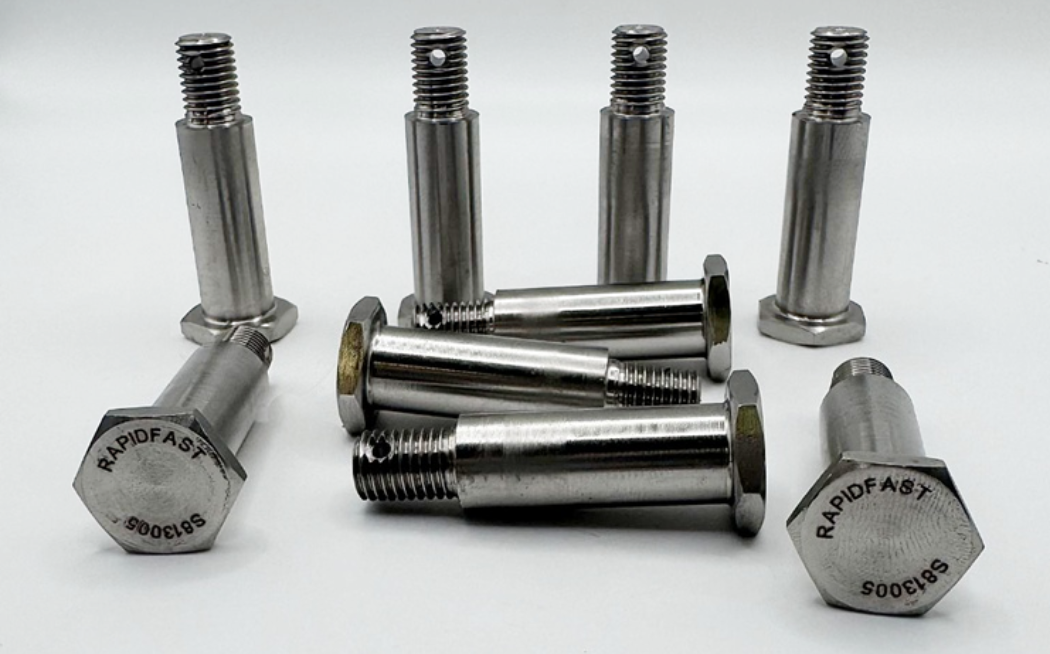
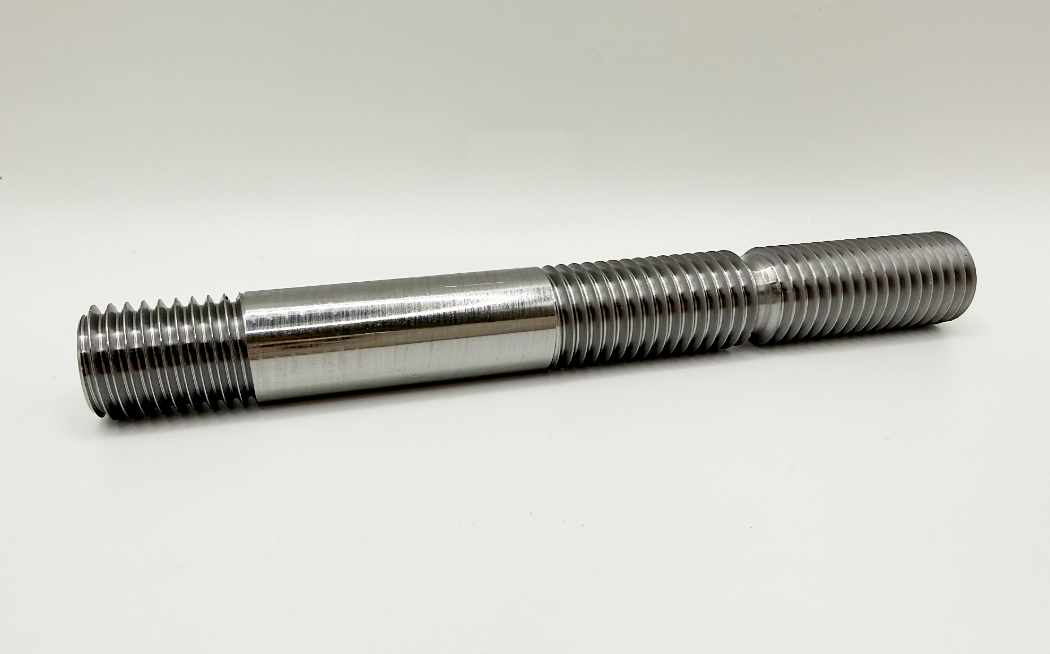
If you’ve been around engineered fasteners long enough, you’ll know that not every product deserves a second look. But every now and then, something lands on the workbench that genuinely warrants a conversation. Today, that something is our High-Performance 3/4 UNC x 165.9mm Engineering Studs in Grade 3125 L7 Steel.
It’s easy to overlook this fastener when standing in front of a billion-pound refinery or a deep water pipeline assembly. The flanges, the pressure vessels, the valves, those are the things that catch the eye. But without the right stud bolt holding all that together under extreme temperature, pressure, and chemical exposure, there is no refinery.
That is why the specification of stud bolts for safety-critical applications is one of the most consequential decisions an engineer or procurement professional will make.
Get it right, and the installation performs quietly and reliably for decades. Get it wrong, and the consequences can be catastrophic.
This is precisely the environment that our L7 engineering studs are built for, and precisely why the material specification behind them matters so much.
A classification standard for high-strength fastener materials, used in pressure and elevated temperature service. The L7 designation specifically refers to a low-alloy steel, typically a chromium-molybdenum (Cr-Mo) alloy, that has been quenched and tempered to achieve its mechanical properties.
The 3125 in the product designation refers to the material grade within that broader classification framework. It signals a very specific set of mechanical properties that engineering teams and inspection bodies can rely upon with confidence.
contributes to hardness, corrosion resistance, and the material’s ability to maintain strength at elevated temperatures. It is not there by accident, it is there because the environments in which L7 studs operate routinely involve thermal cycling, steam, and aggressive media.
is the real workhorse in this alloy composition. It significantly enhances creep resistance, that slow irreversible deformation that occurs in metals under sustained load at high temperatures. Essentially improving the steel’s response to heat treatment. Molybdenum was first identified as a distinct element by Carl Wilhelm Scheele in 1778, though it was not successfully isolated in metallic form until Peter Jacob Hjelm achieved that milestone in 1781. It is a fascinating footnote that a material identified in the late eighteenth century now sits at the heart of some of the most demanding engineering applications on the planet.
– rapidly cooling the heated steel, locks in a hard martensitic microstructure.
– then reduces brittleness while retaining the majority of that hardness.
The result is a fastener that offers an excellent balance of tensile strength, yield strength, and toughness
The dimensional specification of these particular studs deserves careful attention.
The 3/4 UNC thread form (Unified National Coarse) is part of the Unified Thread Standard (UTS), a system developed in 1949 through cooperation between the United Kingdom, United States, and Canada. The goal was explicit and successfully standardised fastener threads across allied manufacturing and defence supply chains.
It was a genuinely significant moment in industrial standardisation history, and the UNC thread profile remains one of the most trusted in heavy industry to this day.
The coarse thread pitch provides excellent resistance to cross-threading and is well-suited to applications where studs may be assembled and disassembled repeatedly. As is the case in many flanged pipeline joints during maintenance cycles.
The 165.9mm length is equally deliberate. In flanged assemblies, the engaged thread length on both the stud body and the nut, combined with the grip length across the flange faces, must be calculated with precision. An engineering stud that is even marginally too short risks insufficient thread engagement. One that is too long can create issues with nut seating and torque distribution.
One of the most impressive qualities of Grade L7 as a material choice is its versatility across dramatically different environments. In the industry, “topside” and “subsea” are often spoken of as though they are simply different locations, but in reality they represent entirely different engineering challenges.
– refineries, chemical processing plants, above-ground pipeline infrastructure. Subject fasteners to thermal cycling, vibration, and exposure to process chemicals. In a refinery setting, stud bolts on heat exchangers, pressure vessels, and reactor flanges may experience temperatures ranging from well below freezing. Frequently during a cold snap, as low as several hundred degrees Celsius, all whilst enduring normal operation. They must maintain clamping force, resist relaxation under load, and survive the periodic thermal expansion and contraction of the flanged assembly without fatigue failure.
– present a different but equally demanding set of challenges. Hydrostatic pressure, near-freezing temperatures, and continuous exposure to seawater create conditions that would rapidly destroy a lesser fastener. The low-alloy composition of L7, combined with appropriate surface treatment and protective coating where required, makes it a dependable choice for subsea flange assemblies. Notably those on wellheads, manifolds, and subsea pipeline tie-ins.
The fact that a single material specification, in this case Grade 3125 L7, can credibly address both of these environments, speaks to the robustness of the alloy and the intelligence of the ASTM A193 standard that governs it.
No serious discussion of L7 stud bolts would be complete without addressing assembly practices. Even the finest engineering stud can be compromised by poor installation.
For stud bolts used in flanged assemblies, the selection of an appropriate thread lubricant or “anti-seize” compound, is critically important. Molybdenum disulphide (MoS₂) based lubricants, copper-based compounds, and nickel-based anti-seize products are all commonly used in these applications. Each has specific characteristics that affect the torque-tension relationship at assembly. The nut factor, the coefficient that relates applied torque to bolt tension, varies significantly depending on the lubricant used. Applying the wrong value can result in either under-tensioning (which risks joint leakage) or over-tensioning (which risks fastener yielding or fatigue failure).
There are fasteners that are adequate, and there are fasteners that are right. The High-Performance 3/4 UNC x 165.9mm Engineering Stud in Grade 3125 L7 Steel sits firmly in the second category.
Whether the application involves flange bolting for a new pipeline installation, stud bolt replacement on a heat exchanger during a scheduled shutdown, or engineering-grade fasteners for a subsea assembly destined to spend the next twenty years on the seabed.
This is a specification that can be relied upon.
The material is proven, the standard is trusted, and the dimensions have been selected with clear purpose.
If you’d like to discuss specific application requirements, compare specifications, or request material availability and technical data, our technical sales team is available to help ensure the specification is right. The first time.
See us in action 🎬https://www.youtube.com/@RapidIndustrialFasteners
@rapidindustrialfasteners

© Rapid Industrial Fasteners Limited.
All rights reserved. All content on this website, including text, images, graphics, logos, product descriptions, downloadable documents, and any other materials, is the intellectual property of Rapid Industrial Fasteners Limited unless otherwise stated.
No part of this website may be reproduced, distributed, modified, transmitted, or stored in any form without prior written permission from Rapid Industrial Fasteners Limited.
You may view, download, and print content for personal or internal business use only. Any commercial use, republication, or redistribution of content is strictly prohibited without express consent.
Unauthorised use of this website’s content may violate copyright, trademark, and other applicable laws.
Website by FolcraTech
© Rapid Industrial Fasteners Limited. All rights reserved. Privacy policy