Rapid Industrial FastenersRapid Industrial Fasteners
 June 2, 2026
In an era where advanced composite materials and high-performance polymers frequently dominate the headlines of the fasteners and fixings industry, it is easy to overlook the enduring reliability of one of engineering’s most trusted workhorses.
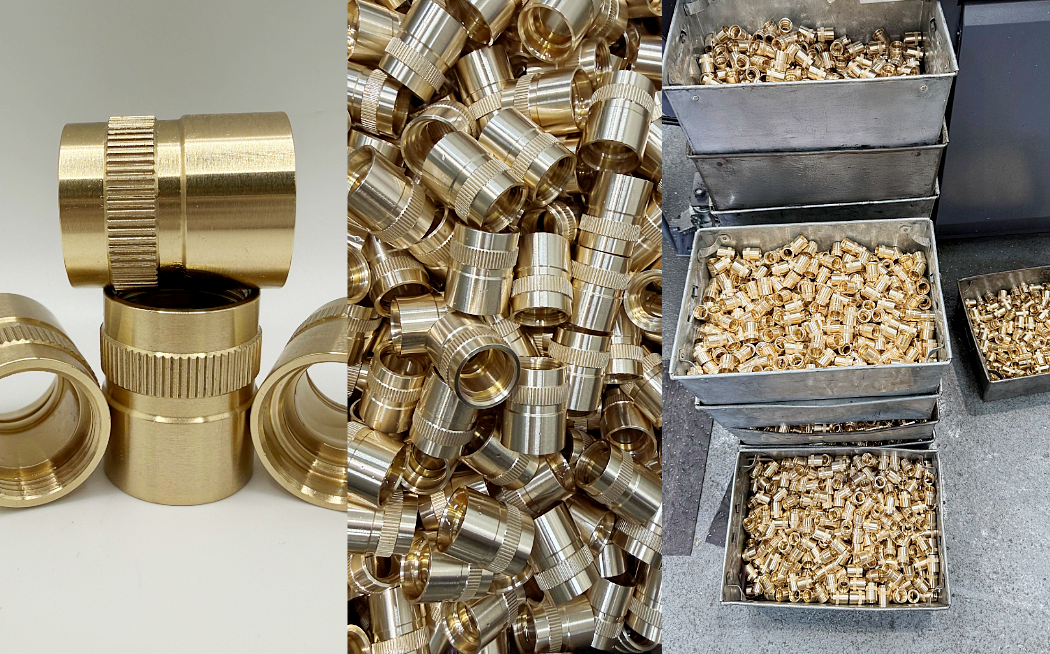
Our 21mm brass hydraulic fittings, though perhaps modest in appearance, continues to command a significant presence across a surprisingly broad spectrum of Industrial British Industries.
At first glance, a brass hydraulic fitting might be categorised as a straightforward, functional component. Something specified, ordered, and installed without much parade. In practice, however, the 21mm variant occupies a remarkably diverse role across multiple trades and sectors. Far from being a single-application fastener, these fittings appear with regularity across the UK’s electrical, plumbing, and architectural joinery industries, each sector drawing upon a distinct set of the material’s inherent properties.
This breadth of application is not coincidental. It is a direct reflection of brass being the material of choice. A material, to which has been refined, tested, and trusted by British engineers and craftsmen for centuries. The 21mm sizing has established itself as something of a standard specification across these trades, offering the dimensional compatibility that contractors and specifiers require when working within established system frameworks.
To understand why brass hydraulic fittings continue to be specified so consistently, we must appreciate the material science underpinning the choice. Brass is an alloy of copper and zinc, to which delivers a combination of properties that few alternative materials can replicate at a comparable cost point.
Firstly, mechanical strength. Brass offers excellent tensile strength and resistance to deformation under load. Making it well-suited to the demands of hydraulic applications where fittings must maintain integrity under sustained pressure. Unlike more brittle alternatives, brass exhibits a degree of ductility that allows it to withstand the stresses of installation and long-term service without fracturing.
Secondly, the electrical trade. Brass possesses outstanding electrical conductivity. Copper, which constitutes the primary constituent of brass, is one of the finest electrical conductors known to engineering. The alloy retains much of this conductivity, making brass fittings the preferred choice wherever secure, low-resistance electrical connections are required. In junction boxes, consumer units, cable management systems, and earthing applications, the conductivity of brass is not merely a convenience. It is a safety-critical specification requirement.
Thirdly, a wide range of built environment applications. Brass is a non-ferrous metal. This means it contains no iron and will not rust. In environments where moisture is present, the absence of ferrous content is of paramount importance. Brass fittings will not corrode in the way that ferrous alternatives do, ensuring longevity, reliability, and the avoidance of costly remedial work further down the line.
A British legacy and certainly the profound role that British industry played in its development and refinement. The Midlands and the Birmingham area in particular, earned global recognition as the heart of the brass manufacturing trade from as early as the seventeenth century. By the Georgian and Victorian eras, Birmingham’s brass foundries were supplying components to industries across the British Empire and beyond.
The term “city of a thousand trades” was frequently applied to Birmingham during this period, and brass manufacturing was central to that reputation. The ingenuity of British metalworkers in developing new alloy compositions, rolling techniques, and forming processes laid the foundations for the precision brass components that the modern fasteners industry continues to produce today.
British inventor and entrepreneur Matthew Boulton, operating from his celebrated Soho Manufactory in Birmingham during the late eighteenth century, was instrumental in elevating the standards of brass and metalwork manufacturing in the United Kingdom. His collaboration with Scottish engineer James Watt on steam power technology further cemented the Midlands’ status as the crucible of British industrial innovation. A legacy that resonates to this day in the quality standards associated with UK-manufactured brass fittings. And, here at Rapid Industrial Fasteners, we are perfectly situated in the heart of the Midlands (Stourbridge).
This heritage is not merely a historical sentiment. It underpins a culture of precision manufacturing and materials expertise that continues to distinguish British-made fasteners and fittings within the global marketplace.
Looking forward, the next stage of development for these fittings is nickel plating. A logical and commercially timed progression.
Nickel plating applied over a brass substrate delivers a compelling package of enhanced properties. The resulting surface offers improved hardness and wear resistance compared to bare brass alone. Making it particularly well-suited to applications involving repeated assembly and disassembly or exposure to abrasive conditions. The nickel finish also provides an additional barrier against corrosion, extending service life in more demanding environments. Broadening the range of applications into which the fittings can be confidently specified.
From an aesthetic perspective, nickel-plated brass fittings offer a bright, silver-toned finish that aligns well with contemporary specification trends. Particularly in architectural and interior applications where visual consistency across a fitting suite is a consideration. The finish is also more receptive to cleaning and maintenance than raw brass, an important factor in the food processing, pharmaceutical, and hygiene-critical sectors where surface integrity is subject to rigorous scrutiny.
Offering nickel-plated variants of our 21mm brass hydraulic fittings reflects a broader commitment to meeting the evolving needs of our customer base. Whether the requirement is driven by performance, compliance, or specification, nickel plating represents our meaningful and well-considered enhancement to an already proven product.
Our 21mm brass hydraulic fitting is a product that rewards closer examination. What presents itself as a functional, unremarkable component reveals, on closer inspection, a material story rooted in centuries of British industrial heritage. A performance profile that serves major UK trades with equal competence. A development roadmap that positions it well for the demands of the modern built environment.
Brass endures because it works. And in the fasteners and fixings industry, that is ultimately the only endorsement that matters.
If you’re looking for expert advice and quality manufacturing, our teams are ready to assist.
See us in action 🎬

© Rapid Industrial Fasteners Limited.
All rights reserved. All content on this website, including text, images, graphics, logos, product descriptions, downloadable documents, and any other materials, is the intellectual property of Rapid Industrial Fasteners Limited unless otherwise stated.
No part of this website may be reproduced, distributed, modified, transmitted, or stored in any form without prior written permission from Rapid Industrial Fasteners Limited.
You may view, download, and print content for personal or internal business use only. Any commercial use, republication, or redistribution of content is strictly prohibited without express consent.
Unauthorised use of this website’s content may violate copyright, trademark, and other applicable laws.
Website by FolcraTech
© Rapid Industrial Fasteners Limited. All rights reserved. Privacy policy