Rapid Industrial FastenersRapid Industrial Fasteners
 June 30, 2026
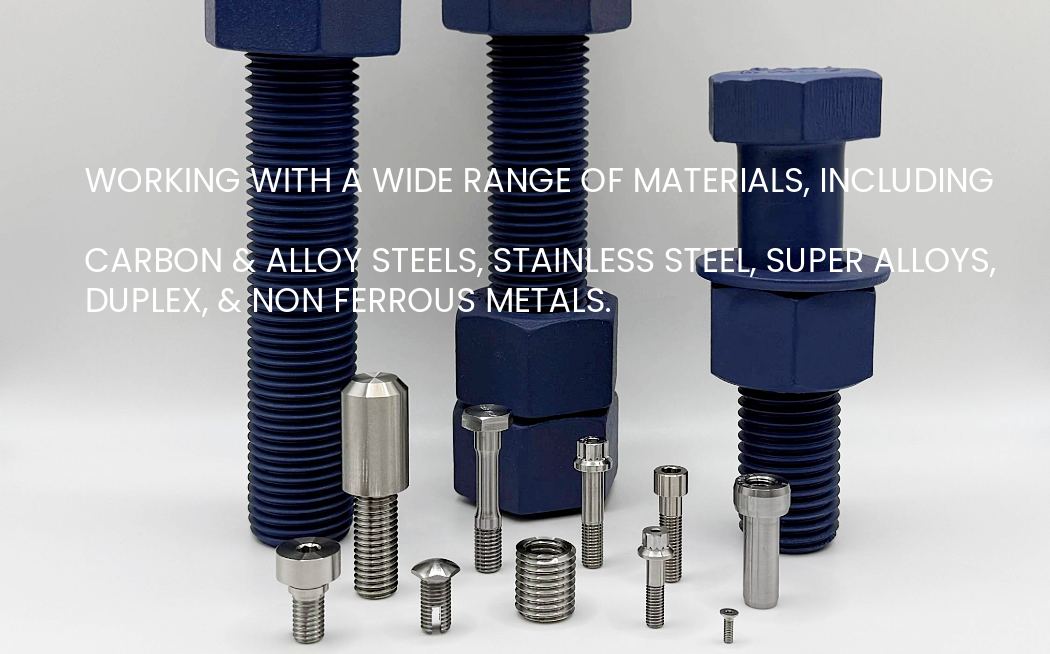
We work with a range of materials, including:
– Carbon and Alloy Steel
– Stainless Steel
– Super Alloys and Duplex Steel
– Non-Ferrous
Materials range comparison table:
| Category | Typical Composition | Key Properties | Strength Level | Corrosion Resistance | Temperature Resistance | Common Uses |
|---|---|---|---|---|---|---|
| Carbon & Alloy Steel | Iron + carbon; alloy steels include Cr, Ni, Mo, V, Mn | High strength, good machinability, cost effective, heat treatable | Medium to very high | Low to moderate (requires coatings) | Moderate; alloy steels can handle higher temps | Structural components, fasteners, automotive, machinery |
| Stainless- Steel | Iron + ≥10.5% chromium; may include Ni, Mo, N | Excellent corrosion resistance, cleanability, good formability, non-rusting | Medium to high (varies by grade) | High (especially 304/316) | Good at both high and low temperatures | Marine hardware, food/medical equipment, architectural, chemical processing |
| Super Alloys | Nickel, cobalt, chromium, molybdenum, titanium | Extreme heat resistance, high strength, oxidation resistance, stable under stress | Very high | Very high | Exceptional — designed for extreme heat | Aerospace, turbines, high temp fasteners, energy sector |
| Duplex Stainless- Steel | 50/50 austenitic + ferritic stainless structure | Very high strength, excellent chloride resistance, good weldability | Very high (≈2× austenitic stainless) | Very high (especially against stress corrosion cracking) | Good | Offshore, petrochemical, marine, chemical tanks, high strength fasteners |
| Non-Ferrous Metals | Aluminium, copper alloys, nickel alloys, titanium, zinc | Lightweight, corrosion resistant, conductive (Cu), high strength-to-weight (Ti) | Low to very high (depends on metal) | Moderate to very high | Varies widely (excellent for Ti & Ni alloys) | Aerospace, electrical systems, marine, transport, decorative hardware |
If you’re looking for expert advice and quality manufacturing, our teams are ready to assist.

© Rapid Industrial Fasteners Limited.
All rights reserved. All content on this website, including text, images, graphics, logos, product descriptions, downloadable documents, and any other materials, is the intellectual property of Rapid Industrial Fasteners Limited unless otherwise stated.
No part of this website may be reproduced, distributed, modified, transmitted, or stored in any form without prior written permission from Rapid Industrial Fasteners Limited.
You may view, download, and print content for personal or internal business use only. Any commercial use, republication, or redistribution of content is strictly prohibited without express consent.
Unauthorised use of this website’s content may violate copyright, trademark, and other applicable laws.
Website by FolcraTech
© Rapid Industrial Fasteners Limited. All rights reserved. Privacy policy