Rapid Industrial FastenersRapid Industrial Fasteners
 July 7, 2026
Here at Rapid Industrial Fasteners, we have long understood that some of the most technically demanding work in British manufacturing happens at the smallest end of the scale.
There is a tendency, in engineering and fabrication, to associate scale with significance. The larger the structure, the more demanding the specification. The heavier the load, the more critical the fastener. It is an understandable assumption. But it is not always correct.
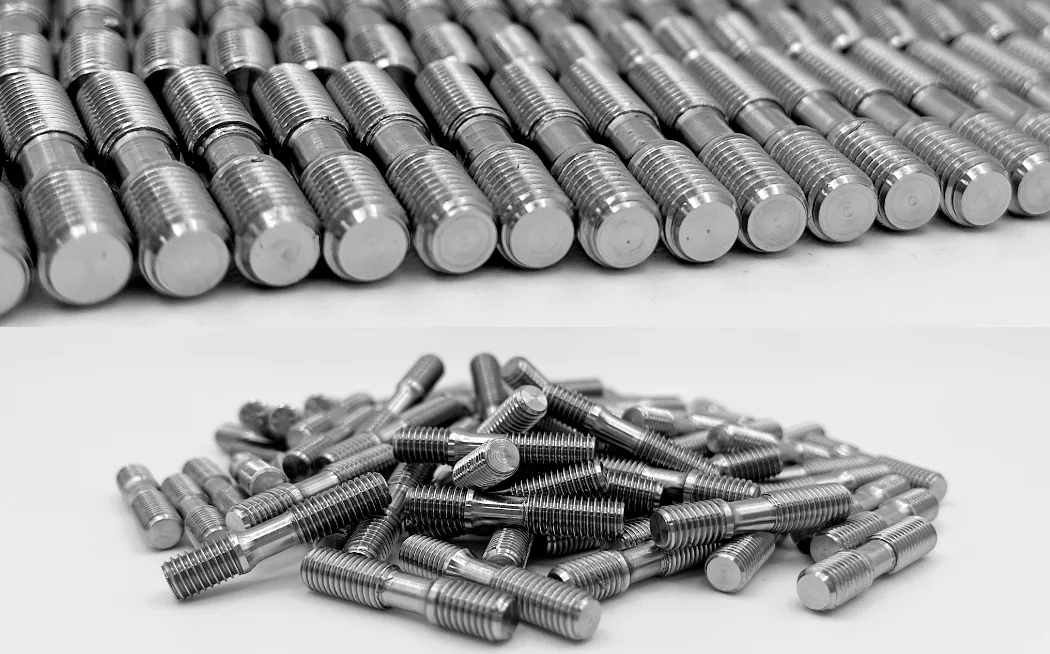
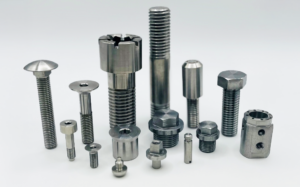
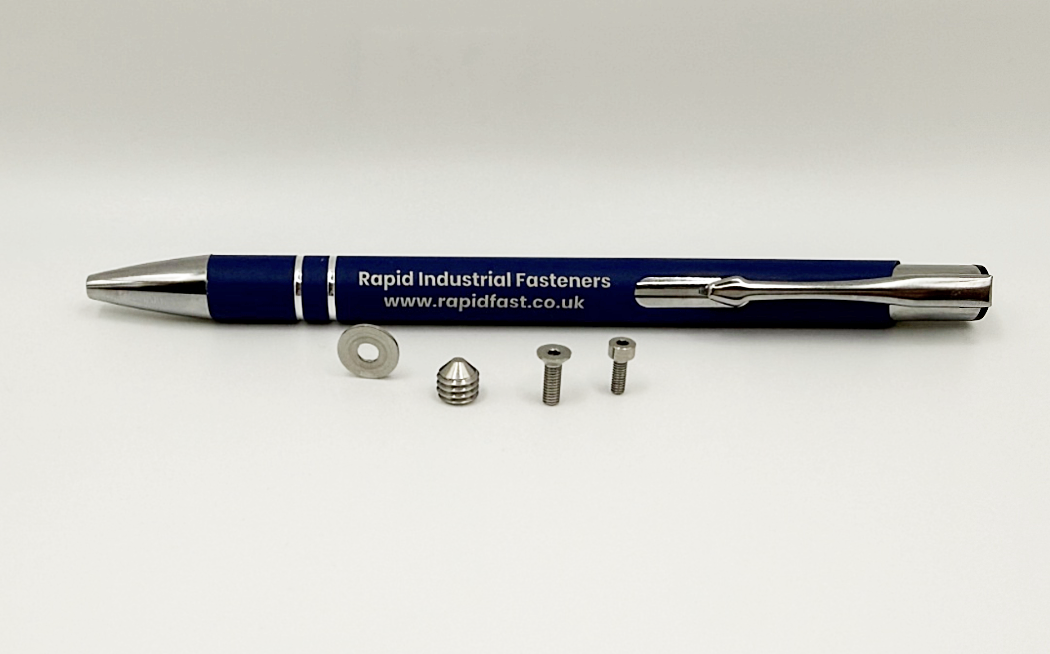
Our bespoke manufactured miniature components are destined for some of the most complex and challenging of assemblies.
The term “miniature components” can be deceptively modest. The manufacture of small-scale mechanical parts demands an exceptionally high level of precision, material knowledge, and process control. Where a standard bolt or stud might tolerate modest variance, a miniature component may be working to tolerances measured in microns.
Our production capability spans a range of thread forms, head configurations, drive types, and material grades. All scalable to the miniature dimensions required by our customers.
We work precisely from supplied specifications to deliver components that perform reliably in service, regardless of the complexity of the application.
There is a proud and deeply rooted tradition in the United Kingdom of achieving extraordinary precision at every scale of manufacture. Much of that tradition traces directly back to the fastener and fixings industry itself.
Joseph Whitworth, the Manchester-born engineer whose 1841 standardisation of screw threads transformed British manufacturing, understood that precision was not a luxury. It was a prerequisite for progress. His work established that repeatable, interchangeable parts were the foundation upon which reliable engineering could be built. That principle holds as true for our miniature components today, as it did for a Victorian-era structural bolt.
Henry Maudslay, whose precision lathe work in the early nineteenth century made consistent small-part manufacture possible for the first time at any meaningful scale, demonstrated that the capability to work with precision at fine tolerances was itself a form of industrial power. The engineering firms that mastered it first, gained competitive advantages that shaped entire industries.
Today, across the UK economy, complex, high-value projects are increasingly dependent on the reliable availability of precision small parts. And, the supply chains that can deliver them consistently.
Few industries place greater demands on fastener and component performance than aerospace and defence. In these sectors, miniature components are routinely specified for avionic housings, sensor assemblies, UAV structures, weapons system sub-assemblies, and satellite components. Weight is a critical constraint, and miniaturisation is one of the primary strategies for achieving it, without compromising structural integrity or functionality.
The UK aerospace sector, which contributes over £35 billion annually to the national economy and supports more than 120,000 jobs, is a significant and growing consumer of precision miniature components.
The proliferation of complex electronics across industrial, commercial, and consumer applications has driven sustained demand for miniature fastening and fixing solutions. PCB assemblies, enclosure hardware, sensor integration, and modular electronics platforms all require reliable small-format mechanical components that can be assembled consistently at volume.
As UK manufacturers continue to invest in automation, Industry 4.0 capability, and smart factory infrastructure. The density and complexity of the assemblies involved only increases and so does the specification requirement for the components within them.
The UK life sciences sector is one of the largest and most innovative in the world. Employing over 280,000 people and accounting for a disproportionate share of national research and development output. Medical device manufacture, diagnostic equipment, surgical instrumentation, and laboratory automation all depend on miniature mechanical components. These components must meet stringent cleanliness, biocompatibility, and dimensional accuracy requirements.
In this sector, traceability and material certification are not optional extras, they are standard requirements, and suppliers are assessed accordingly.
The rapid growth of industrial robotics and autonomous systems across UK manufacturing and logistics is creating a new and expanding source of demand for miniature components. Robotic end effectors, actuator assemblies, precision gearboxes, and collaborative robot platforms all incorporate small-format fasteners. Miniature mechanical parts must perform reliably across millions of operating cycles.
As the robotics sector scales, the supply chains that feed it must scale with it and precision miniature component manufacture is a key part of that picture.
From offshore wind turbine instrumentation to compact hydrogen fuel cell assemblies, the UK’s growing renewables and clean energy sector generates demand for miniature components in applications where performance and longevity are non-negotiable.
These are often harsh-environment applications where material selection, stainless steel grades, specialist alloys, non-ferrous options play a central role in component specification.
One of the less frequently discussed challenges in miniature component manufacture is material selection. At standard fastener sizes, the choice between an A2 stainless steel and an A4, or between a medium carbon steel and an alloy grade, is important but relatively straightforward to implement.
At miniature scale, the same decisions become more complex. The reduced cross-sectional area of the component changes the balance between material properties, thread engagement, and applied load.
At Rapid Industrial Fasteners, our material knowledge extends across this full spectrum. We work with customers at specification stage to ensure that the material chosen for a miniature component is matched not only to the operating environment but to the dimensional and load requirements of the application.
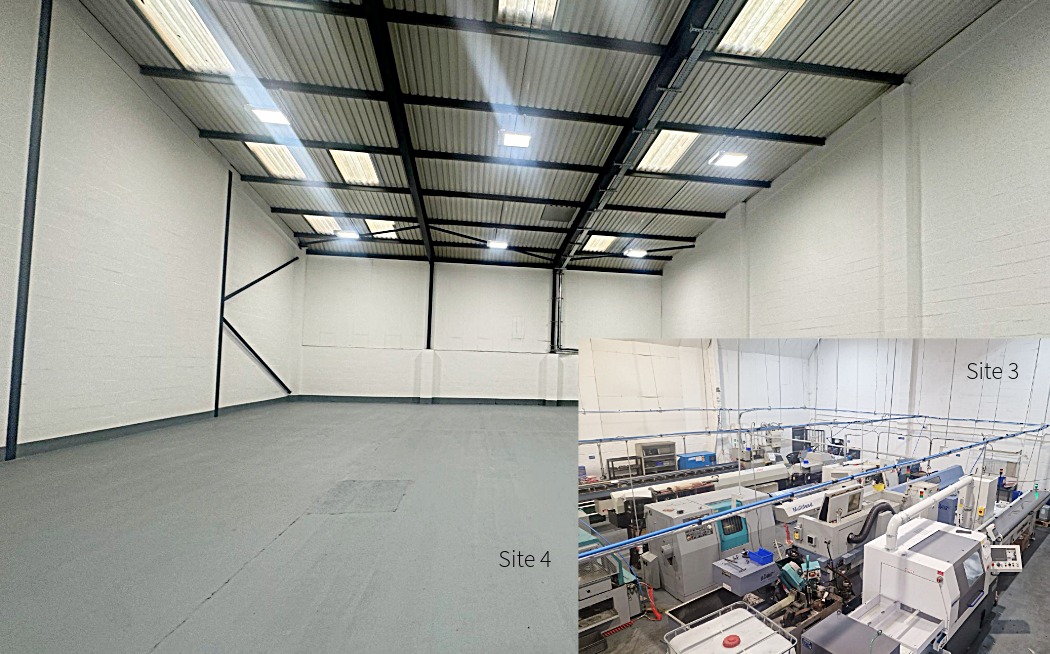
The manufacture of miniature components requires investment in both equipment and expertise. Fine-pitch threading, tight dimensional tolerances, small-format head configurations, and specialist drive forms all demand precise process control and rigorous inspection.
It is not a capability that can be improvised and it is not one that every fastener supplier can genuinely claim.
At Rapid Industrial Fasteners, our manufacturing capability has been developed specifically to support the needs of fabrication and engineering businesses working at this end of the specification range. We produce miniature components to customer-supplied drawings and specifications, working across a range of thread standards including metric fine, unified inch series, and other specialist forms as required.
Our quality processes include dimensional inspection and, where required, material certification and traceability documentation to support customer approval and audit requirements.
Whether your requirement is for a single component type in volume, a range of small-format parts for a complex assembly, or a new specification you are developing from scratch, our team has the expertise and the production capability to help.

© Rapid Industrial Fasteners Limited.
All rights reserved. All content on this website, including text, images, graphics, logos, product descriptions, downloadable documents, and any other materials, is the intellectual property of Rapid Industrial Fasteners Limited unless otherwise stated.
No part of this website may be reproduced, distributed, modified, transmitted, or stored in any form without prior written permission from Rapid Industrial Fasteners Limited.
You may view, download, and print content for personal or internal business use only. Any commercial use, republication, or redistribution of content is strictly prohibited without express consent.
Unauthorised use of this website’s content may violate copyright, trademark, and other applicable laws.
Website by FolcraTech
© Rapid Industrial Fasteners Limited. All rights reserved. Privacy policy