Rapid Industrial FastenersRapid Industrial Fasteners
 July 14, 2026
In precision engineering, the smallest components often carry the greatest responsibility. A single fastener can be the difference between an assembly that performs flawlessly for decades and one that fails prematurely under environmental stress.
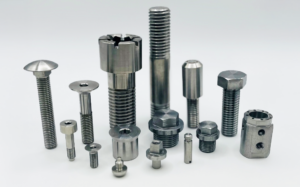
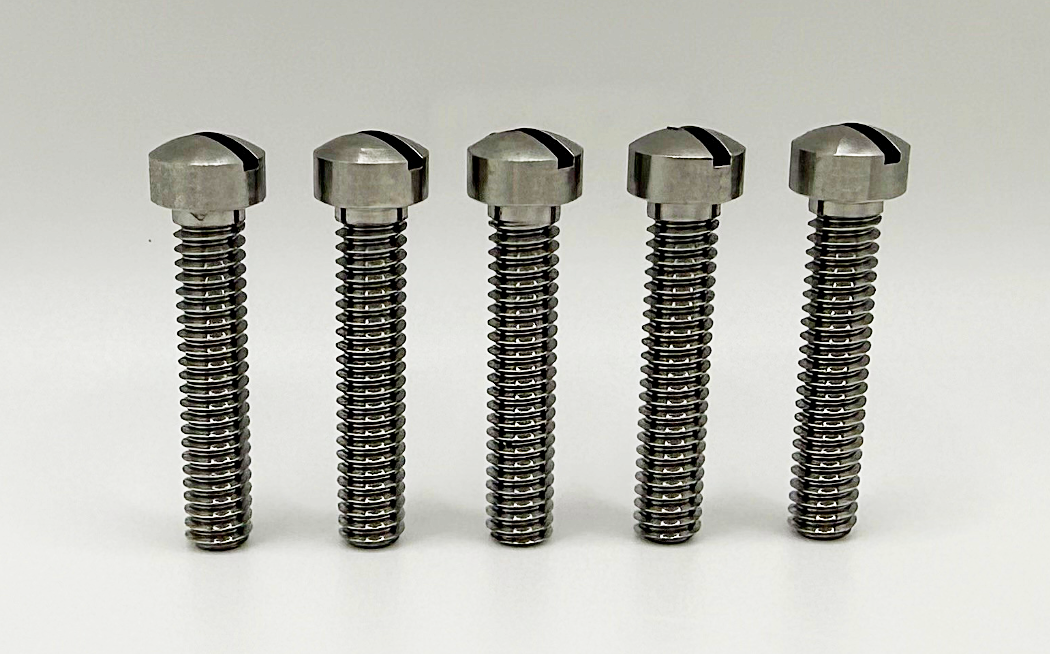
This is precisely the thinking behind our 1-4 UNC 1.1-4 A4 Slot Fillister Heads, a fastener that combines a distinctive historical head profile with modern corrosion-resistant material science.
The fillister head takes its name from an unexpected source, traditional woodworking. In the 19th century, craftsmen used a tool known as a fillister plane, a specialised rebate plane designed to cut a recessed groove or rabbet along the edge of timber. The purpose was functional rather than decorative, creating a clean, flush-fitting joint without the need for additional hardware.
That same engineering logic was carried over into fastener design. The fillister head’s tall, cylindrical profile and recessed shoulder were developed so the screw could sit neatly within a countersunk recess, seating securely without relying on a separate washer to distribute load. It is a subtle detail, but one that speaks to a broader truth in fastener engineering. The best designs are often those that solve a mechanical problem so effectively, that the solution becomes standard practice for well over a century.
The deep-slot drive further reinforces this heritage. Unlike shallower cross-head or hex-drive alternatives, the slot on a fillister head is cut significantly deeper, allowing for greater torque transfer and reduced risk of cam-out during installation. For technicians working on precision assemblies where consistent, controlled tightening is essential, this remains a genuinely practical advantage, not simply a nod to tradition.
Material selection is just as important as head geometry when specifying fasteners for demanding environments. Our fillister screws are manufactured from A4 stainless steel, sometimes referred to as marine grade or 316 stainless steel, a molybdenum-enhanced alloy that offers markedly superior resistance to chloride-induced pitting and crevice corrosion.
This makes A4 the material of choice across a range of demanding sectors, including marine engineering, offshore installations, chemical processing plants, and coastal infrastructure projects. Anywhere fasteners are routinely exposed to saltwater, industrial chemicals, or high humidity.
Where standard fasteners might show visible surface degradation within months, A4 stainless components are engineered to maintain their structural integrity and appearance over a significantly extended service life. Reducing maintenance intervention and total lifecycle cost.
The UNC (Unified National Coarse), is one of the most widely specified thread forms in international manufacturing, valued for its resistance to stripping and its suitability for repeated assembly and disassembly. It is worth noting that Britain has its own significant place in the history of thread standardisation. In 1841, Manchester engineer Joseph Whitworth proposed the first nationally recognised screw thread standard, later adopted as the British Standard Whitworth. Whitworth’s work laid much of the conceptual groundwork for the standardised, interchangeable threads that modern manufacturing now depends on. Principles that continue to underpin thread systems used across the globe today, UNC included.
Fasteners of this specification are frequently selected for use in instrumentation assemblies, marine hardware, electronics enclosures, and precision mechanical builds where both corrosion resistance and a controlled, flush aesthetic finish are essential requirements.
The combination of A4 stainless construction and the fillister head’s characteristic profile makes this fastener particularly well suited to applications where reliability cannot be compromised. Whether that means withstanding a salt-laden marine atmosphere or performing consistently within a tight tolerance mechanical system.
For technical specifications, availability, or bespoke fastener requirements, our team is on hand to provide expert guidance tailored to your application.

© Rapid Industrial Fasteners Limited.
All rights reserved. All content on this website, including text, images, graphics, logos, product descriptions, downloadable documents, and any other materials, is the intellectual property of Rapid Industrial Fasteners Limited unless otherwise stated.
No part of this website may be reproduced, distributed, modified, transmitted, or stored in any form without prior written permission from Rapid Industrial Fasteners Limited.
You may view, download, and print content for personal or internal business use only. Any commercial use, republication, or redistribution of content is strictly prohibited without express consent.
Unauthorised use of this website’s content may violate copyright, trademark, and other applicable laws.
Website by FolcraTech
© Rapid Industrial Fasteners Limited. All rights reserved. Privacy policy