Rapid Industrial FastenersRapid Industrial Fasteners
 June 16, 2026
From coastal infrastructure and offshore platforms, to chemical processing plants and marine-grade construction, the specification of the correct fastener grade has never carried greater consequence.
Here we’re proud to spotlight one of our most sought-after precision fasteners –
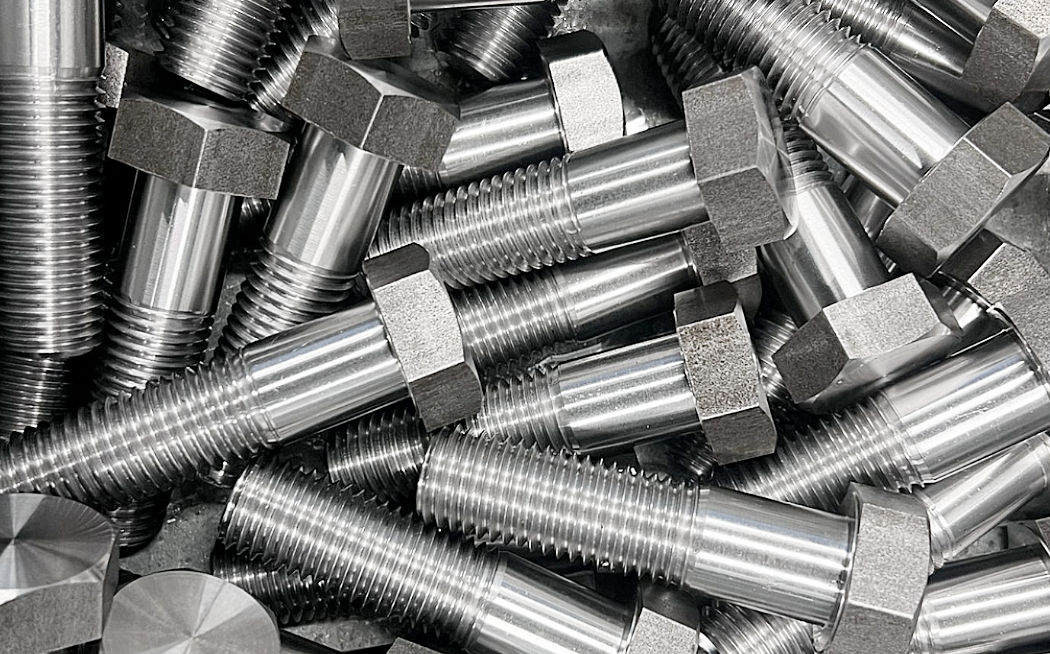
The M24x90 A4-80 ISO 4014 Hex Bolts
A component that exemplifies the interchange of metallurgical excellence and dimensional precision.
When specifying stainless steel fasteners, the grade designation is everything. The A4-80 classification is defined under ISO 3506, the internationally recognised standard governing the mechanical properties of stainless steel fasteners.
“A4” refers to the austenitic stainless steel alloy group. Specifically, a 316-grade stainless steel, while “80” denotes the strength class, indicating a minimum tensile strength of 800 MPa and a minimum proof load stress of 640 MPa.
This places A4-80 in a markedly superior position when compared to its more commonly specified counterpart, the A4-70 grade (minimum tensile strength of 700 MPa). That 100 MPa differential is not trivial. In demanding bolting applications, this difference can mean the line between a compliant, long‑lasting joint and an early, potentially dangerous failure.
For context, A4 stainless steel contains molybdenum in addition to the chromium and nickel content typical of austenitic grades. It is this molybdenum content (typically between 2% and 3%) that elevates A4’s corrosion resistance considerably above that of A2 (304-grade) stainless steel. Particularly in chloride-rich environments such as coastal construction zones, water treatment facilities, and offshore marine structures.
For UK-based projects, where the maritime climate and coastal exposure present persistent corrosion challenges, A4-80 is not an upgrade born of excess caution. It is a specification born of engineering common sense.
Britain has a long and distinguished history in the development of stainless steel. It was Sheffield metallurgist Harry Brearley who, in 1913, is widely credited with the discovery of what would become stainless steel. His observation that a particular iron-chromium alloy resisted acid etching during his examination of gun barrel steels, led to a discovery that would fundamentally transform the global industry.
Although there were parallel claims from German and American researchers, Brearley’s contribution and Sheffield’s broader steel heritage, remains a point of considerable national pride within the UK fastener and metals industry.
Today, the austenitic stainless steels that descend from those early discoveries are amongst the most widely specified materials in the global fasteners market. The A4 grade, as specified for this hex bolt, derives its exceptional corrosion resistance from a self-healing passive layer of chromium oxide that forms spontaneously on the surface when exposed to oxygen. This passive film, typically just nanometres thick, acts as a continuous barrier against oxidising environments. When the molybdenum content of A4 is factored in, resistance to pitting corrosion is dramatically enhanced.
The practical implication for buyers working on UK infrastructure projects is straightforward. Where carbon steel would corrode and A2 stainless steel might suffer pitting in aggressive salt-spray environments, A4-80 performs with long-term reliability. Independent corrosion testing data and decades of field performance in marine-grade applications consistently supports this hierarchy.
In structural applications, the relationship between applied torque and resulting bolt preload is governed by well-understood mechanical principles. But, it is also sensitive to lubrication conditions, surface finish, and material hardness.
A4-80 fasteners, by virtue of their higher hardness and strength compared to A4-70, allow engineers to specify tighter, higher-preload joints. An advantage in structural applications where joint stiffness and resistance to loosening under vibration or dynamic loading, are primary design requirements.
It is also worth noting that austenitic stainless steel, whilst offering outstanding corrosion resistance, is not immune to work hardening effects. The cold working processes employed in the manufacture of A4-80 fasteners are carefully controlled to achieve the required strength class whilst maintaining dimensional accuracy and surface integrity.
This is a key reason why reputable fastener suppliers, those operating under recognised quality management frameworks such as ISO 9001, represent a critical link in the specification and procurement chain.
The M24x90 A4-80 ISO 4014 hex bolt is not a general-purpose fastener. It is a precision-specified component designed for demanding structural bolting applications. It’s dimensions speak directly to the scale of work where it is most at home. M24 is among the larger bolt diameters commonly encountered in structural steelwork, and it is specified routinely in the following:
Jacket structures, subsea equipment support frames, wave energy platforms, and tidal energy installations around the UK coastline rely heavily on large-diameter, high-strength stainless fasteners. The combination of A4-80’s mechanical performance and its resistance to seawater corrosion makes it a default specification choice in these environments.
The UK’s ageing water infrastructure is undergoing significant investment, with projects involving treatment works, pumping stations, and pipeline networks all generating demand for corrosion-resistant structural fasteners. A4-80 hex bolts are regularly specified in flanged pipe connections, equipment mounting, and structural support applications within these facilities.
Plant environments where exposure to aggressive chemicals, elevated temperatures, and process fluids demand the highest levels of both material performance and mechanical reliability. M24 fasteners in A4-80 are a rational specification for vessels, reactors, heat exchangers, and structural steelwork within these facilities.
With the United Kingdom holding the position of one of Europe’s leading markets for offshore wind energy, the structural fastener requirements of wind turbine foundations, transition pieces, and offshore substation structures are substantial. High-strength, corrosion-resistant fasteners are critical components in these long-service, remote assets.
UK bridge engineers and structural steelwork contractors working on exposed or coastal structures increasingly specify A4-grade stainless fasteners for critical connections. Balancing the higher initial material cost against the dramatically reduced whole-life maintenance and replacement expenditure.
One of the most important conversations in the UK fasteners industry at present, is the shift away from unit-price purchasing towards whole-life cost analysis. This shift is particularly pronounced in the structural and civil engineering sectors. Decisions driven in part by the increasing focus on infrastructure durability, reduced maintenance intervention, and sustainability in construction.
The M24x90 A4-80 hex bolt will carry a higher unit cost than its carbon steel or A4-70 counterpart. That is simply a reflection of material composition, manufacturing complexity, and the quality standards to which it is produced. However, when the total cost of ownership is considered, the case for specifying correctly from the outset is compelling and difficult to argue against.
In environments where bolt replacement requires scaffold access, plant shutdown, or marine vessel mobilisation, the cost of a fastener failure vastly exceeds any saving made at the point of initial procurement.
This is a message that experienced structural engineers and specifiers have long understood, and one that is increasingly influencing procurement policy across major UK contractors and infrastructure asset owners.
The M24x90 A4-80 ISO 4014 Hex Bolt represents a fastening solution that has earned its prominence in the specification toolkit of structural engineers and procurement professionals across the UK and beyond. Its combination of 800 MPa tensile strength and the superior corrosion resistance of A4 molybdenum-bearing stainless steel, makes it an entirely rational specification choice.
From the offshore platforms of the North Sea to the coastal bridges of Cornwall and the water treatment infrastructure of the Midlands, this fastener quietly does exactly what it is designed to do. Its stands strong to hold things together, reliably, for the long term.
In an industry built on precision, material integrity, and engineering accountability, that is precisely what matters most.
If you’re looking for expert advice and quality manufacturing, our teams are ready to assist.
See us in action 🎬
https://www.youtube.com/@RapidIndustrialFasteners
https://www.tiktok.com/@rapidindustrialfasteners

© Rapid Industrial Fasteners Limited.
All rights reserved. All content on this website, including text, images, graphics, logos, product descriptions, downloadable documents, and any other materials, is the intellectual property of Rapid Industrial Fasteners Limited unless otherwise stated.
No part of this website may be reproduced, distributed, modified, transmitted, or stored in any form without prior written permission from Rapid Industrial Fasteners Limited.
You may view, download, and print content for personal or internal business use only. Any commercial use, republication, or redistribution of content is strictly prohibited without express consent.
Unauthorised use of this website’s content may violate copyright, trademark, and other applicable laws.
Website by FolcraTech
© Rapid Industrial Fasteners Limited. All rights reserved. Privacy policy