Rapid Industrial FastenersRapid Industrial Fasteners
 July 21, 2026
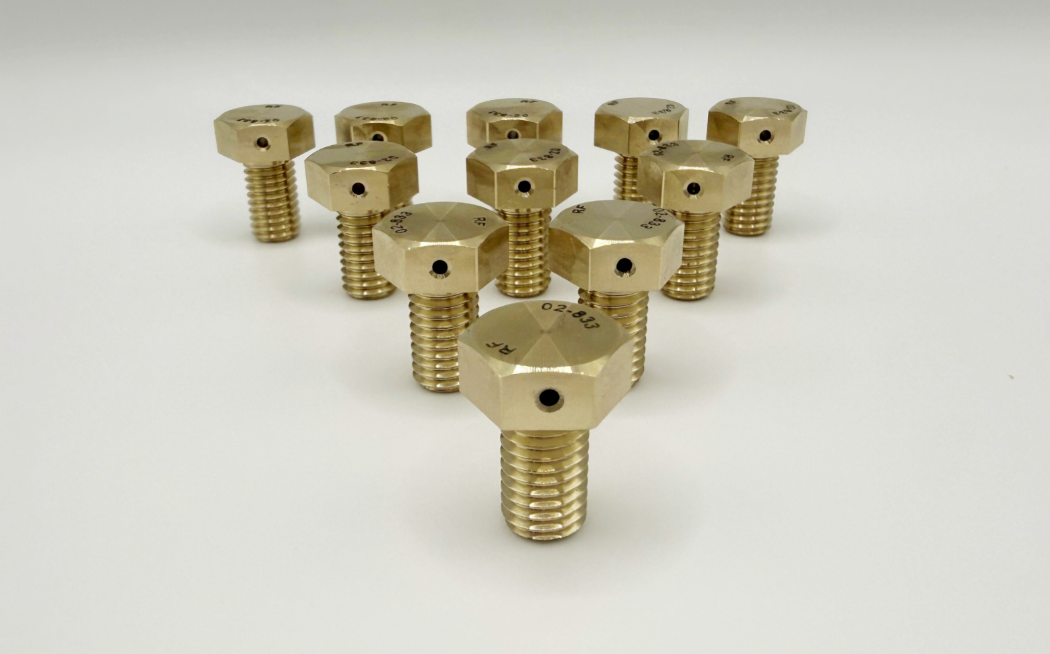
A fastener designed from the outset for positive mechanical locking, typically secured with locking wire or a split pin passed through the drilled hole, rather than relying on torque and friction alone.
In applications where vibration, thermal cycling, or repeated dynamic loading could gradually work a standard bolt loose, that additional layer of security is not a luxury. It is often a regulatory requirement, and always good engineering practice.
Wire locking and split pinning are long-established techniques in engineering environments. The principle is straightforward, even if vibration or thermal movement begins to loosen the torque applied at installation, the bolt is mechanically prevented from backing out entirely.
This approach has deep roots in UK engineering history. Positive locking methods of this kind became standard practice in early British aviation and marine engineering during the twentieth century. A period in which UK innovation in high-performance rotating and reciprocating machinery, including Sir Frank Whittle’s pioneering work on the jet engine, demanded fastening solutions that could be trusted absolutely under extreme vibration and thermal stress.
The same logic now underpins fastener selection across offshore platforms, subsea infrastructure, and high-cycle industrial plant.
02-833 is a nickel aluminium bronze alloy, a material long associated with UK naval and marine engineering. Nickel aluminium bronze grades of this type trace their lineage to standards developed for Royal Navy vessels, where components are routinely exposed to seawater immersion, high flow velocities, and decades of service life without the option of easy replacement.
The alloy owes its performance to a naturally forming, self-healing oxide film on its surface, a protective barrier that continues to resist chloride attack. Even in low-oxygen conditions such as those found in ballast tanks, subsea housings or crevices where other materials would quickly succumb to pitting.
Beyond corrosion resistance, nickel aluminium bronze offers a genuinely rare combination of properties. It is notably strong for a copper-based alloy, resisting cavitation erosion where other metals fail under turbulent flow. It provides excellent wear and galling resistance in components that see repeated movement or contact.
It is also non-sparking, a property valued in environments where ferrous tooling and fittings would present an ignition risk, and it has around twice the damping capacity of steel, a characteristic historically prized in vibration-sensitive marine machinery.
Few materials tick so many boxes at once, which is precisely why this alloy family has remained the material of choice for demanding seawater and high-vibration applications for well over half a century.
Our technical team here at Rapid Industrial Fasteners are on hand to confirm your specification allowing for where required helpful recommendations.
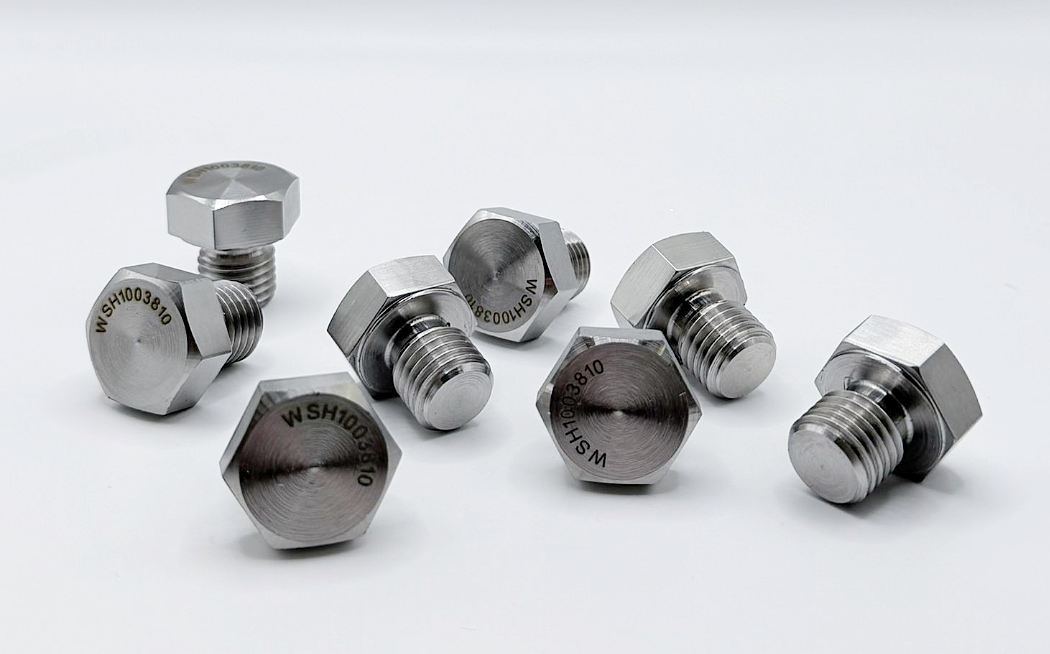
To discuss bespoke Hex Bolts from 02-833 nickel aluminium bronze, or any other high-integrity fastening requirement, our team are ready to assist.
See us in action 🎬YouTube & TikTok

© Rapid Industrial Fasteners Limited.
All rights reserved. All content on this website, including text, images, graphics, logos, product descriptions, downloadable documents, and any other materials, is the intellectual property of Rapid Industrial Fasteners Limited unless otherwise stated.
No part of this website may be reproduced, distributed, modified, transmitted, or stored in any form without prior written permission from Rapid Industrial Fasteners Limited.
You may view, download, and print content for personal or internal business use only. Any commercial use, republication, or redistribution of content is strictly prohibited without express consent.
Unauthorised use of this website’s content may violate copyright, trademark, and other applicable laws.
Website by FolcraTech
© Rapid Industrial Fasteners Limited. All rights reserved. Privacy policy