Rapid Industrial FastenersRapid Industrial Fasteners
 August 4, 2026
Nowhere is this more evident than in cable entry systems, where a single adaptor stands between a secure, weatherproof enclosure and a costly point of failure.
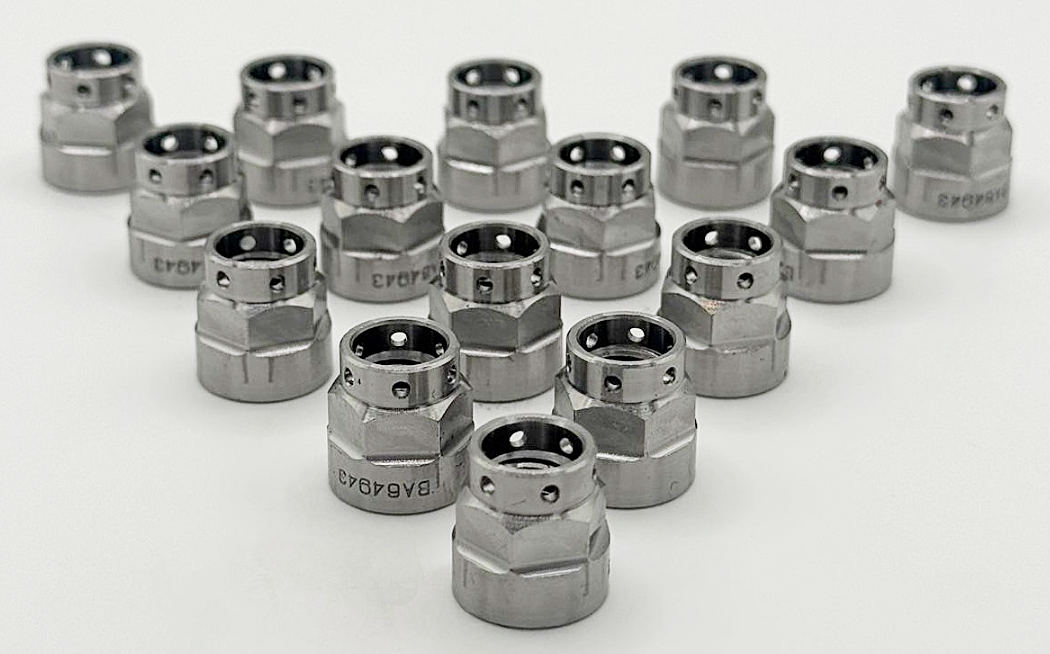
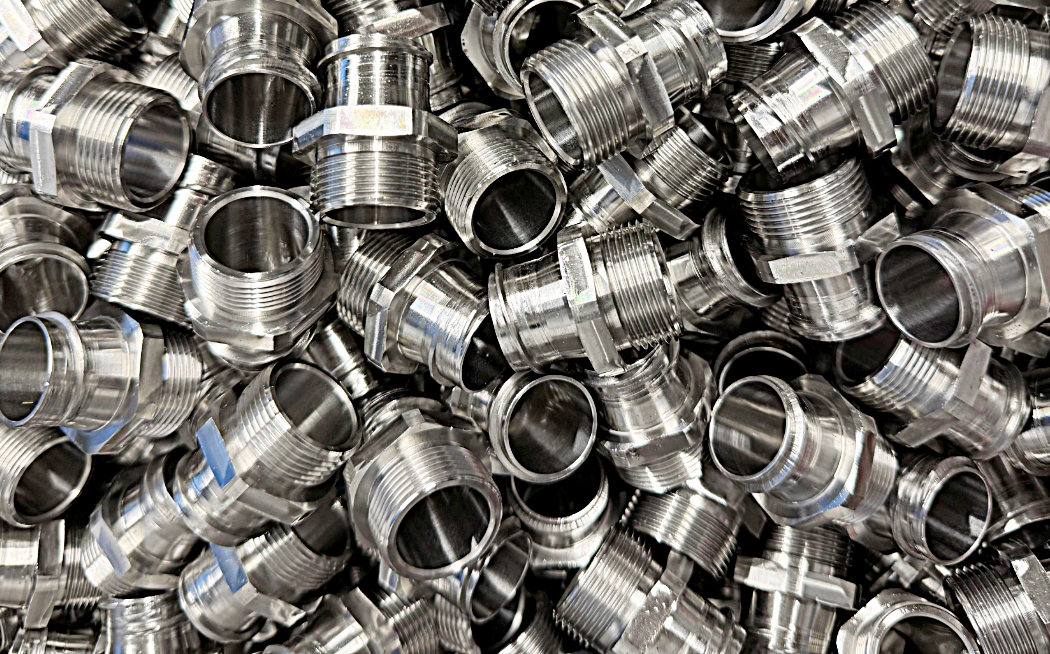
Here at Rapid Industrial Fasteners, we’ve seen sustained and growing demand for our 316 stainless steel M25 adaptors. A product that quietly solves one of the most persistent headaches facing UK panel builders, electrical contractors, and maintenance engineers – how to connect components that were never designed to speak the same language.
The M25 adaptor exists to bridge a gap, literally and figuratively. Its role is to provide a strong, reliable transition between differing connection requirements, allowing components with mismatched thread forms, sizes, or standards to be joined securely and safely. This might sound like a modest engineering task, but in practice it is one of the most common and most critical challenges on any industrial site. Particularly where equipment has been added, replaced, or upgraded over decades rather than installed as a single coherent system.
M25 itself is a size with particular significance in the UK electrical industry. It corresponds to the standard entry size for 25mm metric cable glands, a specification widely defined under IEC 60423 (adopted in Europe as EN 60423), which governs the metric threads used across cable entry systems. This makes M25 a familiar and heavily specified size in industrial control panels, switchgear, and explosion-protected equipment. Where cable glands must interface precisely with the enclosures they seal. Where an installation calls for a transition between differing thread standards or component types at this entry point, a properly specified M25 adaptor becomes indispensable.
To understand why demand for these adaptors remains so consistent, it helps to look back nearly half a century. The UK’s metrication programme, formally coordinated by the Metrication Board between 1969 and 1981, transformed how British industry designed, manufactured, and specified components. British Steel completed its own switch to metric measurement in April 1972, and much of heavy engineering followed a similar sector-by-sector path through the decade. Yet the transition was famously incomplete. Political will faltered, the voluntary approach lost momentum once the Metrication Board was wound down, and many sectors were left to manage the changeover at their own pace.
The result is an industrial landscape that, even fifty years on, still bears the fingerprints of that unfinished transition. A significant proportion of legacy installations across UK manufacturing sites, process plants, and distribution facilities feature a working mixture of imperial and metric fittings. Components sitting side by side in panels and enclosures that have been serviced, extended, and adapted many times over. For engineers maintaining or upgrading this equipment, a well-made adaptor is not a convenience. It is often the only practical way to integrate new metric-standard components, such as the modern M25 cable glands, into infrastructure that predates full metrication entirely. This is precisely why demand for bespoke adaptors in this size remains so resilient. It is not a passing trend but a structural feature of British industrial history.
Solving a thread mismatch is only half the task. The environments in which M25 adaptors are typically deployed, industrial control panels, outdoor switchgear, and explosion-protected equipment, place serious demands on material performance. This is why we manufacture our M25 adaptors from 316 stainless steel rather than standard grades.
316 belongs to the austenitic family of stainless steels, distinguished from more common grades such as 304. The addition of molybdenum, significantly improves resistance to pitting and crevice corrosion, particularly in chloride-rich, humid, or chemically aggressive environments. For an adaptor that may sit exposed at a cable entry point for years, potentially outdoors, in a coastal location, or in a washdown-prone process environment, that additional resistance is not a luxury specification. It is often the difference between a component that performs reliably for the working life of the installation and one that requires early replacement.
It is worth noting that the story of stainless steel itself is a distinctly British one. Harry Brearley, a metallurgist working at Brown Firth Laboratories in Sheffield, produced what is widely regarded as the first true stainless steel alloy. On 13th August 1913, while investigating erosion-resistant materials for gun barrels, his discovery of a chromium steel that resisted staining and acid attack laid the foundation for an entire materials category. The work did not stop there. Brearley’s successor at the same Sheffield laboratory, William Herbert Hatfield, went on to develop 18/8 stainless steel in 1924, the composition that underpins many of the austenitic grades, including 316, still specified across industry today.
That a component as unassuming as a cable entry adaptor can trace its material heritage directly back to a Sheffield laboratory over a century ago is a reminder of just how much of modern engineering rests on this country’s metallurgical foundations.
Where M25 adaptors are specified for use with explosion-protected equipment, the margin for error narrows considerably. Hazardous area installations demand components that maintain their sealing integrity and mechanical strength under sustained environmental stress, without compromising the certified protection method of the enclosure. A poorly specified or corrosion-prone adaptor at this point in the system represents a genuine risk, not merely an inconvenience. This is why so many of our enquiries for 316 stainless steel M25 adaptors come directly from engineers working on control panels and equipment destined for hazardous or explosion-protected zones, where the specification simply does not allow for compromise.
While M25 is by far the most requested size in this category, reflecting its dominance in UK electrical cable gland specifications, no two installations are identical. We regularly manufacture bespoke adaptors to accommodate specific thread combinations, non-standard lengths, and unusual legacy fittings that fall outside typical catalogue ranges. This bespoke capability is central to why demand has remained so consistently strong. Off-the-shelf solutions rarely account for the sheer variety of imperial-to-metric combinations still found across British industry, and our customers increasingly rely on us to engineer the exact transition component their installation actually needs, rather than the nearest available compromise.
As UK industries continue to modernise legacy sites, upgrade control systems, and bring older installations into line with current electrical and hazardous area standards, the humble adaptor is likely to remain in steady demand for years to come.
Far from being a niche or secondary product, the 316 stainless steel M25 adaptor sits at a genuinely important junction point in modern industrial infrastructure. Quietly reconciling 50 years of engineering history every time an enclosure is opened, and a new cable gland is fitted.
For technical specification support, bespoke thread combinations, or bulk enquiries for 316 stainless steel M25 adaptors, our team is on hand to help engineer the right solution for your installation.
See us in action 🎬YouTube & TikTok

© Rapid Industrial Fasteners Limited.
All rights reserved. All content on this website, including text, images, graphics, logos, product descriptions, downloadable documents, and any other materials, is the intellectual property of Rapid Industrial Fasteners Limited unless otherwise stated.
No part of this website may be reproduced, distributed, modified, transmitted, or stored in any form without prior written permission from Rapid Industrial Fasteners Limited.
You may view, download, and print content for personal or internal business use only. Any commercial use, republication, or redistribution of content is strictly prohibited without express consent.
Unauthorised use of this website’s content may violate copyright, trademark, and other applicable laws.
Website by FolcraTech
© Rapid Industrial Fasteners Limited. All rights reserved. Privacy policy