Rapid Industrial FastenersRapid Industrial Fasteners
 October 6, 2026
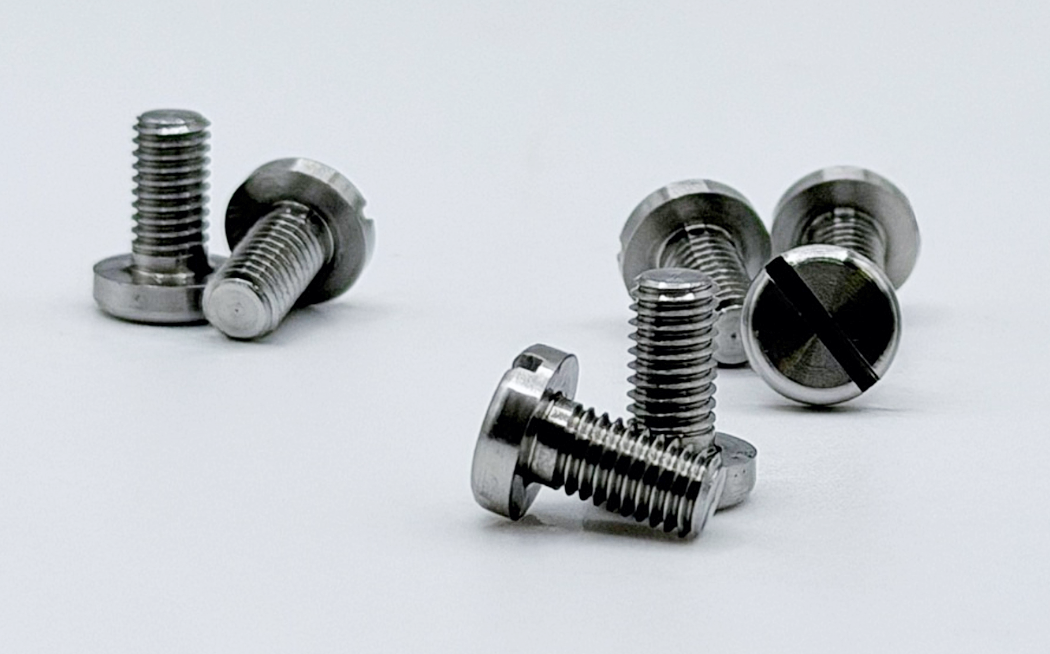
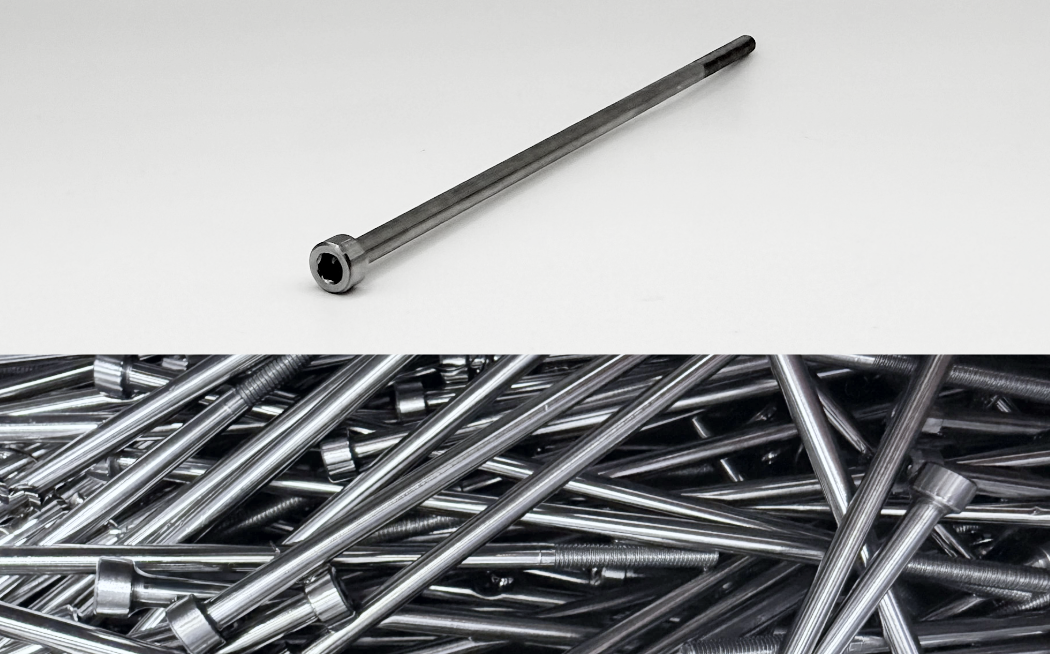
Not every demanding application calls for a large-diameter fastener. In precision engineering, instrumentation housings, and compact pressure-critical assemblies, strength often needs to be delivered in a small footprint. Which, is where our M3 x 102 socket cap screws, manufactured from L7 alloy steel, come into their own.
L7 is a chromium-molybdenum alloy steel, most commonly recognised under the ASTM A193/A320 specifications governing bolting materials for high-temperature and low-temperature, pressure-retaining applications respectively. It’s a material that has earned its long-standing reputation its remarkable ability to retain toughness and ductility in conditions that would cause many other steels to become brittle and fail.
Manufactured to a strength class broadly comparable to 8.8 property class fasteners, our L7 socket cap screws undergo a quench-and-temper heat treatment process that refines the steel’s internal grain structure, giving the material its distinctive combination of high tensile strength and impact resistance. Even in sub-zero and cryogenic service environments.
Crucially, L7 bolting is Charpy V-notch impact tested at –101°C. To put that into perspective, that’s colder than the South Pole records during an average Antarctic winter. This isn’t a marginal engineering benchmark, it’s a deliberate, rigorous standard designed to guarantee that the material will not fracture or lose structural integrity under sudden load in genuinely extreme cold.
The study of extreme low temperatures has deep roots in British scientific history. Scottish physicist and chemist Sir James Dewar, working at the Royal Institution in London during the late 19th century, pioneered much of the foundational research into cryogenics. Successfully liquefying hydrogen in 1898 and inventing the vacuum flask as a means of preserving substances at extremely low temperatures. His work laid the scientific groundwork for the cryogenic engineering principles that underpin modern LNG, industrial gas, and sub-zero pressure system design today.
It’s a fitting piece of heritage to sit alongside a material like L7, whose entire purpose is to perform reliably in the very conditions Dewar spent his career studying.
The M3 x 102 socket cap screw’s slim profile, combined with the low-temperature toughness of L7, makes it particularly well suited to:
The socket cap head design itself adds further practical value, offering a high torque capacity relative to its size and a low-profile finish suited to applications where fastener heads sit within a recessed bore or counterbore. Common in instrumentation and precision equipment housings.
Our L7 socket cap screws are manufactured and tested to meet the exacting standards demanded by pressure-critical and low-temperature service applications. For engineers and procurement specialists working across cryogenic, offshore, and industrial gas sectors, that means specifying a fastener with a genuinely proven track record.
From the pioneering cryogenic research conducted in Britain over a century ago, to the precision-manufactured alloy steel fasteners keeping today’s cold-critical systems safely bolted together, the M3 x 102 L7 socket cap screw is a small component carrying a genuinely serious engineering pedigree.
If you’re looking for expert advice and quality manufacturing, our teams are ready to assist.
See us in action 🎬 YouTube & TikTok & Gallery

© Rapid Industrial Fasteners Limited.
All rights reserved. All content on this website, including text, images, graphics, logos, product descriptions, downloadable documents, and any other materials, is the intellectual property of Rapid Industrial Fasteners Limited unless otherwise stated.
No part of this website may be reproduced, distributed, modified, transmitted, or stored in any form without prior written permission from Rapid Industrial Fasteners Limited.
You may view, download, and print content for personal or internal business use only. Any commercial use, republication, or redistribution of content is strictly prohibited without express consent.
Unauthorised use of this website’s content may violate copyright, trademark, and other applicable laws.
Website by FolcraTech
© Rapid Industrial Fasteners Limited. All rights reserved. Privacy policy